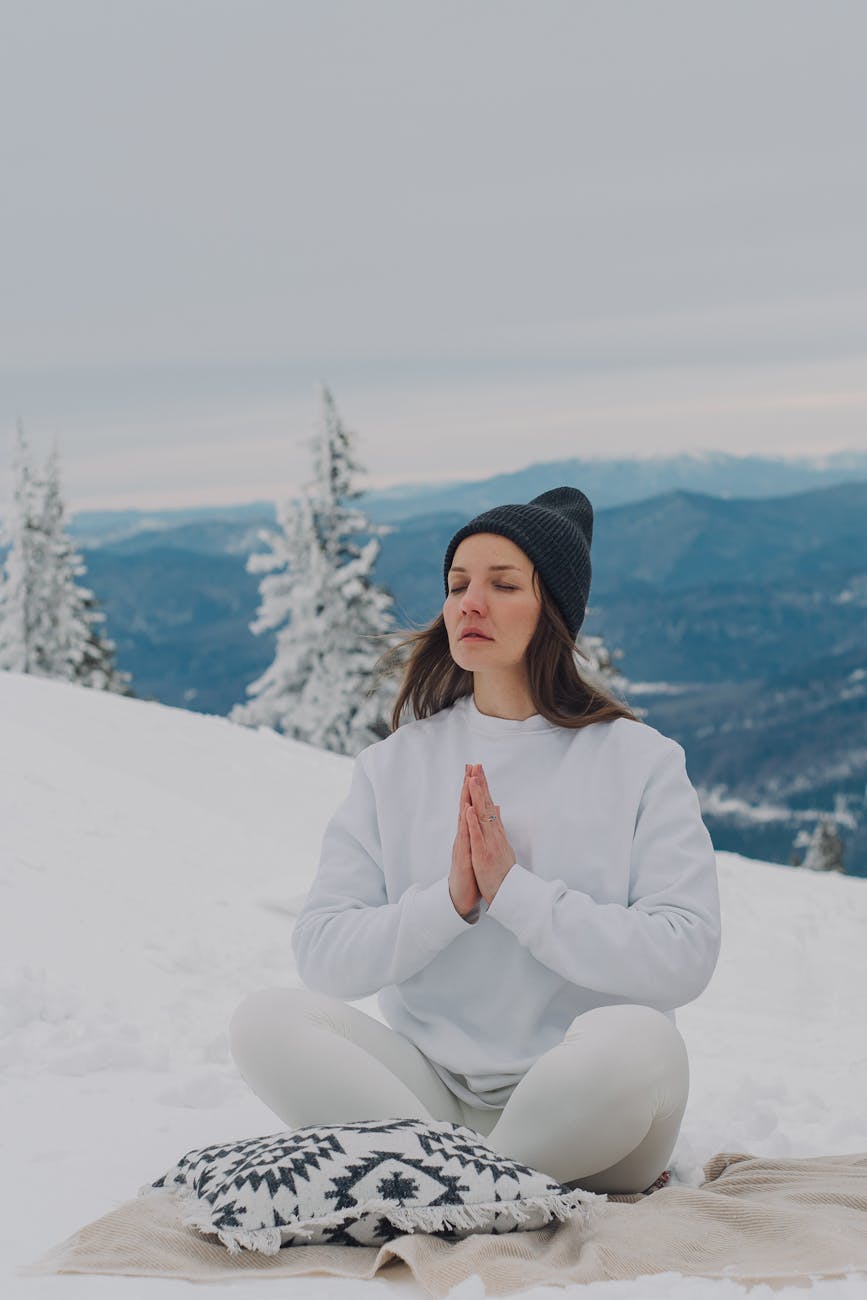
A seasonally aligned approach to movement, rest and energy
If you have already read my previous post about Winter energy (click here to read if not done yet), then you know it well: winter asks us to slow down. And so the next question that naturally comes is: how do we practice yoga in a way that truly supports us in this season?
First, let me tell you this: practicing yoga in winter is definetely not about stopping the movement altogether. You should keep on doing it, but rather focusing on changing the quality of how you move, breathe and rest during this period of time, so that the practice nourishes rather than depletes you.
Less shapes, more sensation
In winter, the body surely benefits from fewer postures held for longer time, rather than many dynamic transitions. This allows us to feel more and do less. From both a yogic and TCM perspective, winter is a time to:
- conserve energy rather than expend it
- listen to sensation rather than chase intensity
- prioritize internal awareness over external form
The slower and passive type of yoga known as Yin yoga or restorative, fits this season naturally the best. Long-held, supported poses gently stimulate the connective tissues, joints and meridians – especially those related to the Water element (Kidneys and Bladder). These practices encourage good circulation without strain and create space for the nervous system to settle.
Supporting the Water element through practice
In Traditional Chinese Medicine, the Kidneys store our essential life force (Jing). When this energy is protected, we feel steady, grounded and resilient.
Yoga practices that support the Water element include:
- forward folds (inward, grounding, calming)
- hip and lower back opening (Kidney and Bladder pathways)
- reclined and supine poses (safety and containment)
- long pauses and stillness
These shapes are not meant to stretch aggressively, but to invite softness and circulation while maintaining warmth and comfort in the body.
In addition to this, breath is seen as a winter anchor. Winter breathing practices should be slow, subtle and steady, so rather than stimulating techniques, winter favors:
- nasal breathing
- longer exhalations
- gentle pauses between breaths
This type of breathing communicates safety to the nervous system and supports digestion, sleep and emotional balance = all areas that can feel challenged during darker months.
The role of stillness and Yoga Nidra
Stillness is not the absence of practice -i t is the practice in winter.
Yoga Nidra and meditation allow the body to enter deep parasympathetic states where repair happens naturally. In this space:
- muscles soften
- the mind clears without effort
- energy is restored rather than consumed
This kind of rest is especially valuable when external demands remain high, but internal resources are lower.
A winter practice doesn’t need to be long
One of the most important teachings of winter is simplicity. A supportive winter practice might look like:
- 20 minutes of Yin yoga
- a few minutes of gentle breathing
- ending the practice in stillness or 15 min Yoga Nidra
But what’s the most important is consistency. During winter, it matters much more than duration of the practice. Returning to the mat regularly, without pressure, builds trust with the body and supports your long-term balance. When we align our yoga practice with winter energy, we stop working against ourselves and invite the full recovery mode that our body naturally needs. So instead of asking:
How can I do more?
we should rather begin asking:
How can I listen better?
Because winter invites us into a quieter relationship with movement. The one, which is rooted in awareness, softness and respect for our natural rhythms.
This is not falling behind.
This is practicing according to the season.
If you feel called to explore this way of practicing, you’re warmly welcome to join me in my classes. You’ll find my current schedule via the link HERE.





Leave a Reply