This is my third blog post about winter season, completing the winter trilogy on philosophy → practice → lifestyle & ritual. This very last one is about supporting rest, energy and inner stability in the quiet season of the year in your daily life. Just because (I hope that you know it already well): yoga practice doesn’t begin and end on the mat. In winter especially, the way we live, eat, rest and structure our days has a profound effect on how balanced we feel: physically, emotionally and energetically. Both, yoga philosophy and Traditional Chinese Medicine remind us that true well-being comes from living in harmony with natural cycles. And winter asks us not only to practice differently, but to live differently. Because it is a time of containment. As per TCM wisdom we know, that winter is the season of the Water element: a time of storage, preservation and inward movement. Just as rivers slow and retreat beneath the surface, our energy also benefits from limitation rather than dispersion. This means:
- fewer social demands
- quieter evenings
- simpler routines
- less stimulation
That type of containment should not be seen as restriction, but as protection of ourselves. Thus, by conserving energy in winter, we create the conditions for vitality and creativity to emerge naturally in spring.
Another important thing to do during this season is: creating warmth and safety. Winter rituals focus on warmth, which is supposed to be not only on physical, but also emotional level. Plus some easy things for the nervous-system warmth. The simplest ways to cultivate all of this include:
- warm meals and teas
- layers and blankets
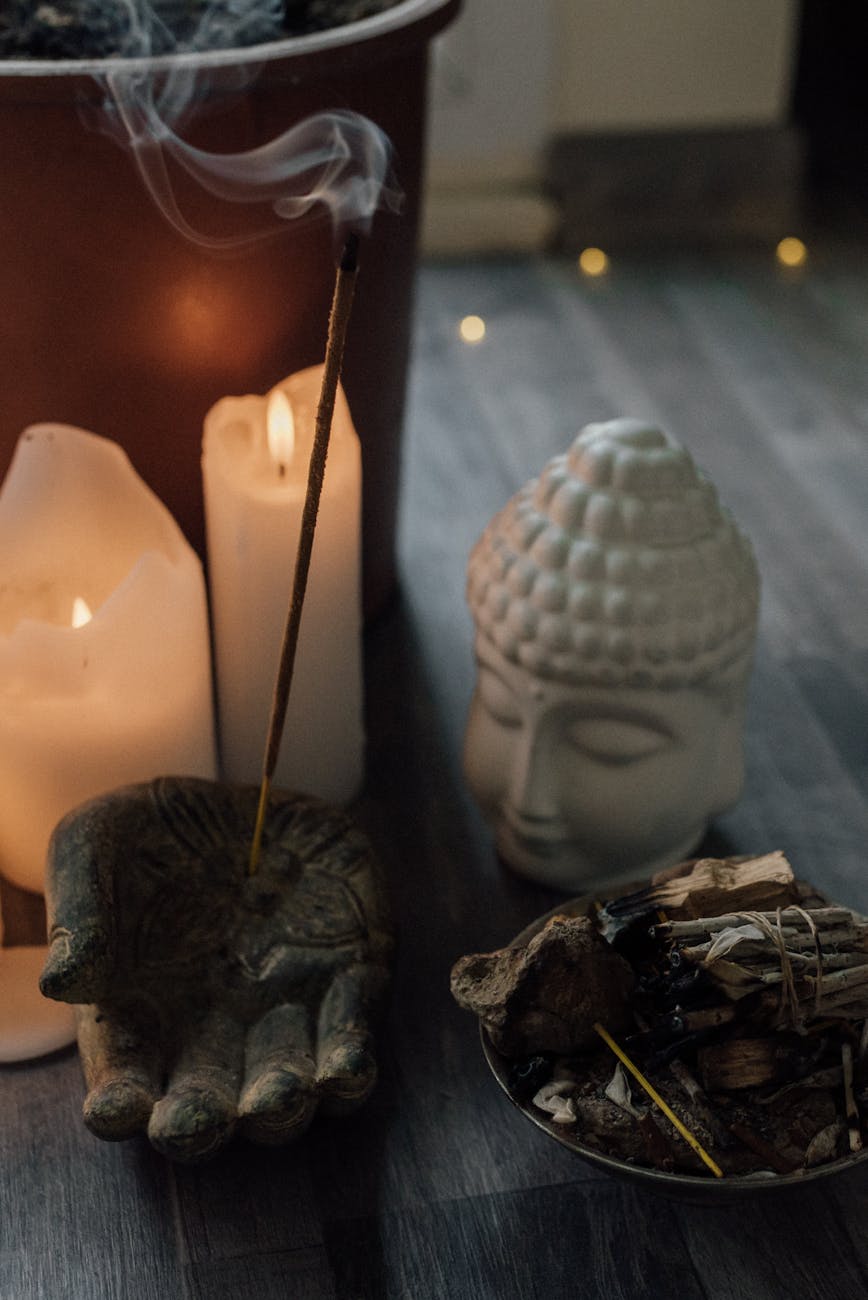
- dim lighting and candles
- slower mornings and evenings
These elements communicate safety to the nervous system, allowing the body to relax and repair, which from a yogic perspective supports ahimsa = non-harming, toward ourselves. Also winter evening rituals play a crucial role as they prepare us to rest. This is when the body naturally wants to slow down, digest and prepare for sleep. Supportive evening rituals might include:
- gentle stretching or Yin yoga
- breathing practices with long exhalations
- Yoga Nidra or body scanning
- journaling or quiet reflection
Moreover, reducing screen time and bright lights helps protect the Water element and supports deeper sleep, which is a cornerstone of winter health.
Stillness as a daily practice
In a culture that values productivity, stillness can feel uncomfortable. Yet in winter, stillness is not only appropriate, but it is necessary. A few minutes of intentional stillness each day can have enourmous influence on your body, thus it:
- calms the nervous system
- helps process emotions
- reconnects us with intuition
This could be meditation, silent sitting or simply pausing with a hand on the heart and a few conscious breaths. Stillness allows us to hear what constant movement drowns out. It helps us to honour our body’s signals, while winter asks us to listen closely to the body’s quieter cues such as:
- subtle fatigue
- need for more sleep
- desire for warmth and simplicity
Responding to these signals is an act of wisdom, not weakness. Both yoga and TCM emphasize that ignoring the body’s messages eventually leads to imbalance. Winter is a perfect time to learn how to respond early and gently, rather than wait for exhaustion.
The idea for all these Winter rituals is not adding more to your day, but to live the practice and to choose less, with intention. It could be something like:
Lighting a candle.
Going to bed earlier.
Saying no when needed.
Allowing space between activities.
These small, yet consistent choices will create a life that supports your practice, without constantly draining it.
So now, I would like to remind you this: nothing in nature rushes in winter.
And nothing is wasted in its stillness. By honoring winter through mindful rituals, we build strong roots: physically, emotionally and energetically. These roots are what allow us to grow with ease when the light returns.
Winter is a time of preparation.
It doesn’t ask us to completely disappear.
It asks us to deepen, go even more inwards, into ourselves.
Take a few moments today to check in with yourself. What does your body, mind or heart need in this season? And if you’d like guidance, come practice with me on the mat.
Just in case: you can check my schedule here.





Leave a Reply