In the quiet moments of the morning, before the day begins to unfold, there is an opportunity to reconnect with your body, the breath and a sense of inner clarity.
One of the most simple, yet powerful practices from the yogic tradition to support this is Jala Neti – a gentle nasal cleansing technique that has been used for centuries in both Hatha Yoga and Ayurveda.
What is Jala Neti?
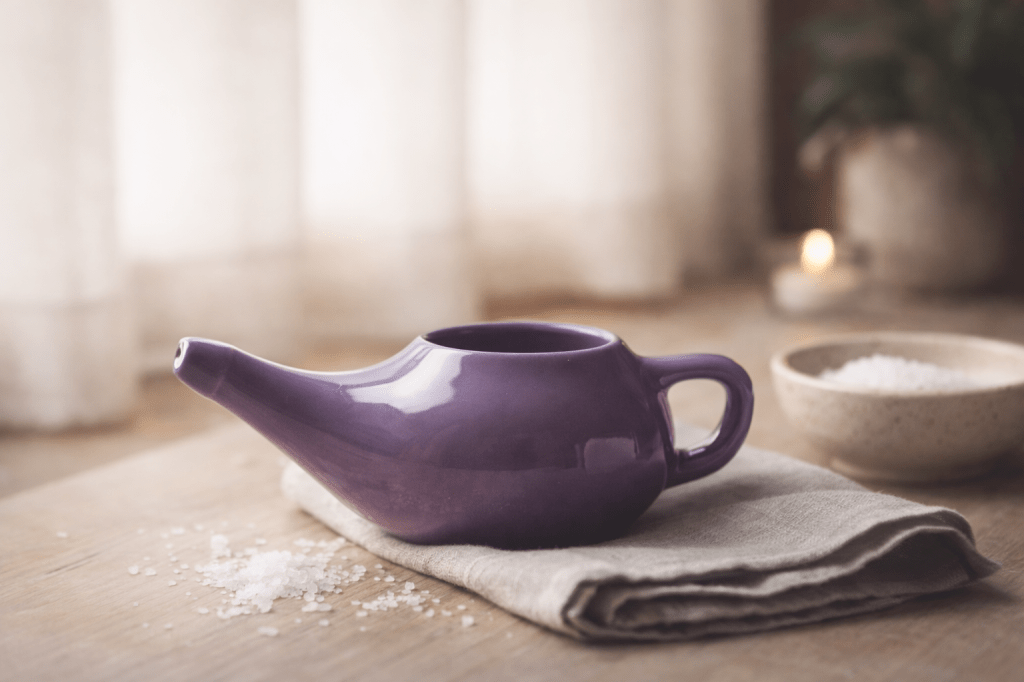
Jala Neti is a traditional cleansing practice that involves rinsing the nasal passages with warm salt water using a small pot, called a neti pot. In classical Hatha Yoga, it is considered one of the Shatkarmas – the six purification techniques designed to cleanse the body and prepare it for deeper practices such as pranayama and meditation. While it may sound unusual at first, Jala Neti is in fact a very natural and effective way to support the body’s own cleansing mechanisms.
Why cleanse the nose?
We breathe in thousands of particles every day like dust, pollen, bacteria and many other pollutants (most of the times not even realizing it..). Our nose acts as a first line of defense, filtering and humidifying the air before it reaches deeper into the body. Thus Jala Neti supports this natural function by gently clearing the nasal passages and sinuses. With regular practice, it can:
- remove dust, allergens and excess mucus
- support the natural cleansing system of the nasal hairs (cilia)
- help prevent or ease hay fever and sinus congestion
- reduce irritation and swelling of the mucous membranes
- moisturize dry nasal passages
- improve overall breathing quality
In addition, beyond the physical effects, many practitioners also experience a sense of mental clarity and lightness after the practice.
Jala Neti and the flow of energy
As you may already know: in yoga the breath is more than just a physiological function. It is actually closely linked to the flow of prana = our vital life force. The ancient texts describe how the airflow through the nostrils alternates throughout the day, typically shifting every 60–90 minutes. This natural rhythm is connected to different energetic states in the body and mind, influencing the following:
- focus and clarity
- physical activity
- emotional balance
- introversion and extroversion
When one or both nostrils are blocked, this natural flow can become disturbed. And here comes Jala Neti – it helps to restore balance by allowing the breath to move freely again, creating a sense of harmony not only in the body, but also in the mind. For this reason, it is often practiced before pranayama, to ensure that the breath – and therefore prana – can flow without restriction.
How to practice Jala Neti
The procedure itself is simple and can become a beautiful part of your morning routine. What you need is:
- a neti pot
- lukewarm water
- natural (non-iodized) salt
Preparation: mix the water with salt to create an isotonic solution (approximately 1 teaspoon of salt per 1 liter of water or about ¼ teaspoon per neti pot). The salt is important as it prevents irritation and has a gentle antiseptic effect.
Step-by-step instruction to follow:
- Stand comfortably over a sink.
- Gently place the spout of the neti pot into one nostril.
- Tilt your head slightly forward and to the side (ears roughly aligned).
- Keep your mouth open and breathe calmly through the mouth.
- Allow the water to flow in through one nostril and out through the other.
- Switch sides and repeat.
After the practice: it is essential to dry the nasal passages properly. Just do the following:
- Gently exhale through the nose to remove any remaining water
- Lean slightly forward (like a soft forward fold or even downward dog)
- Take a few moments to ensure everything feels clear and dry
A ritual, not just a technique
While Jala Neti has many physical benefits, its deeper value lies in the quality of attention you bring to it. It is a moment to pause, to wake up gently and to clear not only the breath, but also the mind. Especially in times where the external world feels busy or overwhelming, small rituals like this can create a sense of grounding and inner space. For this reasons Jala Neti is best practiced:
- in the morning, before eating
- before pranayama or meditation
- regularly, but without force (a few times per week can already be supportive)
Jala Neti is a simple and gentle invitation to give yourself a little moment of self-care. Not every practice has to be complex to be meaningful. Sometimes, the simplest rituals like a breath, a pause or a small act of care, can shift how we move through the entire day. Jala Neti is definitely one of those practices: a quiet way to begin. Clear. Light. Present.
If you feel curious about this practice, you might try it yourself and notice what changes – not only in your breath, but in the way you meet your day. Then let me know in the comments how it felt for you. I am excited to hear about it.







Leave a Reply