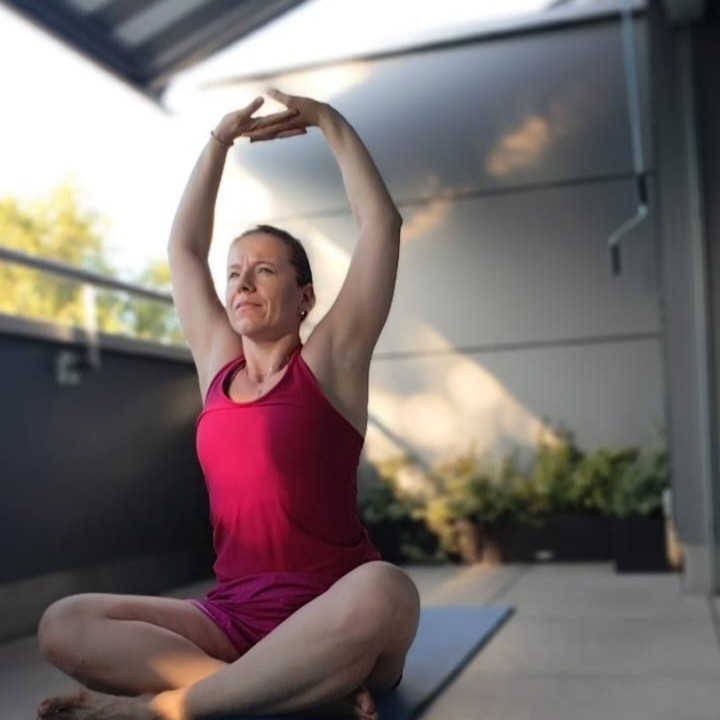
Why the way you move matters just as much as how much you move.
Have you ever noticed that sometimes you finish a practice feeling energised, clear and grounded, while other times you walk after the training feeling even more exhausted than when you started? The difference is not always the intensity of the session. More often than you realise, it is the state of the nervous system you bring into the movement.
Many people think of movement as something that is done to strengthen muscles, improve mobility or burn calories. While all of these benefits certainly exist, movement also serves another purpose that is often overlooked. It is one of the most effective ways that you have to communicate with your nervous system.
Your nervous system is constantly scanning the environment, asking one simple question: am I safe? And the answer to that question influences everything from muscle tension and breathing patterns to focus, recovery, digestion and even how you experience pain. If you live in a fast-paced environment, constantly switching between meetings, notifications, deadlines and responsibilities, the nervous system can remain in a prolonged state of activation. You may not consciously feel stressed anymore because your body has adapted to functioning that way, so that it simply becomes your normal. And this is where mindful movement becomes so valuable.
Most people think that yoga is good mainly for stretching muscles or improving flexibility, but most important thing is that it creates an opportunity to slow down enough for the nervous system to recognise safety again. When you start to breathe slower, move intentionally and putting your attention on the present moment, the body received these signals and it recognizes that there is no longer the needs to stay on high alert. This does not mean that every yoga practice needs to be slow or restorative. Dynamic movement can also regulate the nervous system just as effectively when it is approached with much awareness rather than urgency, but the difference lies in intention and purpose: are you moving because you are trying to escape how you feel? Or are you moving to better understand how you feel? That distinction changes everything.
One of the most fascinating aspects of the nervous system is that it responds less to the exercise itself than to how you experience it. Two people can perform exactly the same sequence of movements while having completely different physiological responses. One finishes feeling calm and capable and the other leaves feeling depleted. This is why awareness is such an essential part of movement. When you begin paying attention to your breath, muscle tension, energy levels and the quality of your attention, movement becomes more than physical exercise. It becomes an information, where you start recognising patterns that you previously might have ignored. Perhaps the shoulders tighten every time work becomes overwhelming. Perhaps the jaw clenches during challenging poses. Perhaps holding the breath has become an unconscious habit. What’s important here to say is that none of these observations are problems to fix. They are just simply a kind of conversations the body has been trying to have with you.
Modern neuroscience increasingly supports what yoga has taught for centuries: the body and mind cannot be separated. The way you breathe influences the nervous system, the way you move influences the brain and the quality of your focus shapes your physiological state. And this is why even a relatively short practice can completely change how you feel: not because yoga magically removes stress, but because it changes how the nervous system responds to it. Over time, this creates something much more valuable than flexibility or strength. It builds resilience..
Resilience is known in psychology as the ability to adapt well to adversity, trauma or significant stress. It involves mental, emotional and behavioral flexibility, allowing individuals to “bounce back” from difficult experiences and adjust to internal or external demands. So it does not mean you should never be feeling stressed, but be able to return to balance more efficiently after life inevitably pulls you away from it. For busy minds and active bodies, this may be one of the greatest benefits of a consistent practice: the body learns that effort and recovery belong together, that strength and softness are not opposites and that slowing down is sometimes the fastest way to move forward. And perhaps this is the reason why yoga has remained relevant for thousands of years: not only because it teaches you how to move into difficult shapes, but mainly because it teaches you how to move through life with greater awareness. And so when your awareness grows, then the regulation follows and the nervous system begins to trust the body again. Also your breath becomes steadier, your movement more intentional and instead of constantly reacting to life, you simple become more capable of responding to it and what is happening around. That, perhaps, is one of the deepest purposes of movement: not simply to create a stronger body, but to create a more regulated, resilient and connected human being.
If you would like to build a stronger, more resilient and more aware relationship with your body, I would love to work with you. Whether in a group class or during a personalised 1:1 session, we’ll explore movement that supports your body – not just today, but for many years to come. Check what I am offering – right here.





Leave a Reply