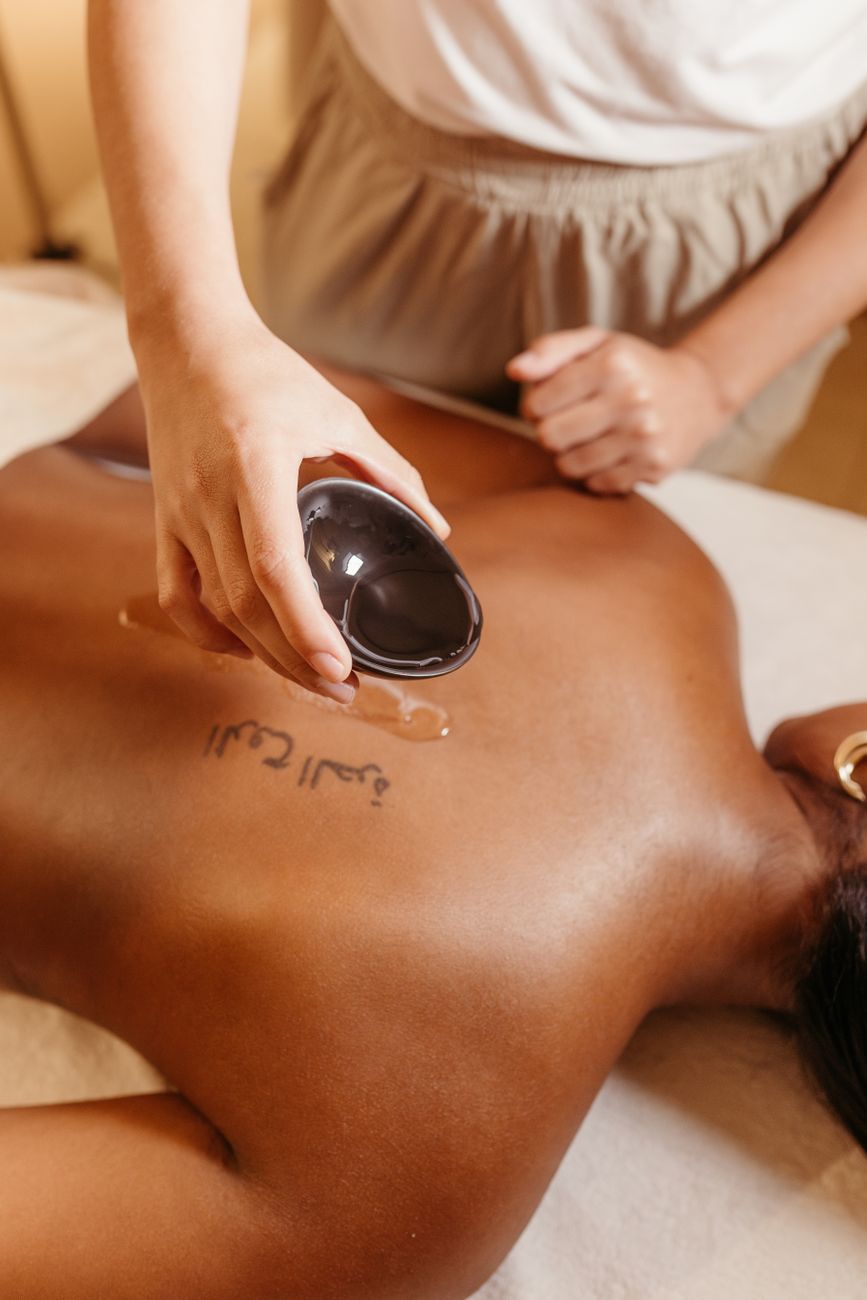
A simple ritual to nourish the body, calm the nervous system and reconnect with yourself.
Touch is one of the first senses we develop, yet perhaps one of the most neglected in adulthood. We spend much of our lives moving, working, training and caring for others, but rarely take a few intentional moments to care for our own bodies through touch. In Ayurveda, this practice is known as Abhyanga – the daily ritual of applying warm oil to the body using slow, mindful massage. More than simply moisturising the skin, Abhyanga is considered a way of nourishing the entire system, supporting circulation, calming the nervous system and cultivating a deeper relationship with the body. I personally love rituals that encourage us to slow down without needing me to do more. Abhyanga is one of them, because even a few minutes of warm oil and mindful touch can completely change how I feel before the day begins or after a long one comes to an end.
Why is Abhyanga so valuable?
In Ayurveda, the skin is much more than a protective barrier. It is seen as an important sensory organ that constantly communicates with the nervous system. Every sensation we experience through the skin influences how safe, calm or alert the body feels. Modern science supports many aspects of this understanding: gentle touch has been shown to activate receptors in the skin that communicate directly with the brain and nervous system. Slow, rhythmic massage may help reduce stress, promote relaxation and support the body’s shift from a state of constant alertness into one of rest and recovery. While more research is still needed on traditional Ayurvedic self-massage specifically, studies on massage therapy suggest benefits such as reduced perceived stress, improved relaxation and enhanced body awareness. Perhaps this is one of the reasons Abhyanga has remained an important part of Ayurvedic daily routines for thousands of years.
More than skin care
Many people first notice that their skin feels softer after practicing Abhyanga. While this is certainly a pleasant benefit, the practice reaches much deeper. Regular Abhyanga may help:
- nourish and moisturise the skin
- promote relaxation
- support circulation
- reduce the feeling of muscular tension
- increase body awareness
- create a calming transition between activity and rest
Above all, it offers something many of us rarely experience: intentional, caring attention towards our own bodies.
The nervous system loves predictable rituals
One of the reasons one can enjoy Abhyanga so much is that it isn’t only about the oil itself, but the consistency, since our nervous system responds well to predictable, repetitive rituals. When we repeat the same calming practice day after day, the body begins to associate it with safety, slowing down and recovery. Just as mindful movement teaches the body to move with greater awareness, Abhyanga teaches the body to rest with greater awareness.
How to practice Abhyanga
The beauty of this ritual lies in its simplicity. Here’s the step by step plan what and how to do:
1. Choose an oil
Traditionally, warm sesame oil is most commonly recommended in Ayurveda because of its nourishing and warming qualities. Depending on the season and your personal preference, other oils such as coconut, almond or jojoba oil can also be used. Choose a natural, cold-pressed oil whenever possible.
2. Warm the oil
Gently warm a small amount of oil until it feels pleasantly warm against the skin. It should never feel hot.
3. Apply with intention
Using slow, gentle strokes, massage the oil into the body. Traditionally long strokes are used on the limbs, circular movements around the joints and gentle circular movements on the abdomen following the direction of digestion. There is no need to rush. Just allow the breath to slow down as your attention moves through the body.
4. Let the oil absorb
If possible, allow the oil to remain on the skin for around 10–20 minutes before showering. Many people enjoy using this time for gentle stretching, meditation or preparing breakfast.
5. Shower gently
A warm shower helps remove excess oil while leaving the skin feeling soft and nourished.
A conversation through touch
In yoga, we often cultivate awareness through movement, however Abhyanga invites us to cultivate awareness through touch: as your hands move across the body, you begin to notice areas of tension, fatigue, sensitivity or ease. Instead of trying to change them immediately, you simply become aware of them and sometimes that kind of awareness can be the beginning of healing.
A small ritual with a lasting impact
We often think self-care has to be complicated, yet Abhyanga show us that sometimes the most meaningful practices are also the simplest, like just a few quiet minutes of warm oil, gentle touch and conscious breath. Such small rituals help us build a relationship with the body that is based not on performance, but on care. And perhaps that is one of the greatest lessons Ayurveda offers us: well-being is rarely created through one extraordinary action, but through many ordinary moments repeated with attention and intention. Such as movement teaches us how to connect with our bodies in action, Abhyanga teaches us how to connect with them in stillness. Both are essential for long-term health and well-being.
If you’re looking for more ways to support your body beyond movement alone, I would love to share these practices with you. Whether through yoga classes, private sessions or here on the blog, my goal is to help you better understand your body and build sustainable rituals that support your well-being.
———————————————————————-
Wellness in simple words
Abhyanga is the Sanskrit word for the traditional Ayurvedic practice of applying warm oil to the body using mindful self-massage. It is part of Dinacharya (the daily routine) and is traditionally used to nourish the body, calm the nervous system and promote balance.







Leave a Reply