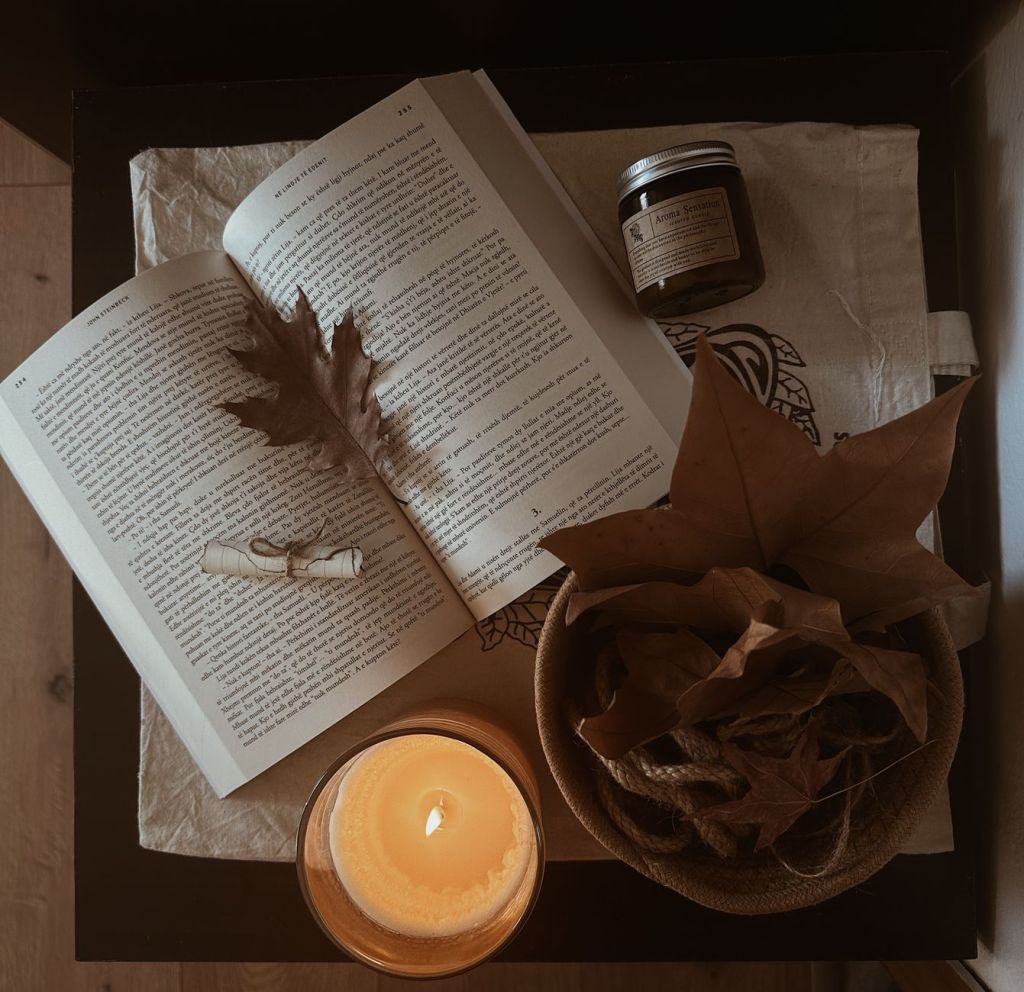
This is the third and final post of the Autumn Trilogy, completing the exploration of autumn through philosophy → practice → lifestyle & ritual. In the first article, we explored the deeper meaning of autumn through the lens of yoga philosophy and Traditional Chinese Medicine. In the second, we looked at how movement, breath and yoga practice can support us during this season of release and now we arrive at the final piece: how to actually live autumn.
Unlike the expansive energy of summer or the nourishing steadiness of late summer, autumn invites us into a different relationship with life. The days become shorter, the light softer and nature gradually begins to withdraw its energy inward. Trees release their leaves, temperatures cool and the pace of the natural world begins to slow. We often feel this shift within ourselves too, like there may be a greater desire for quiet, more time at home, deeper reflection and less interest in constant stimulation. While modern life rarely slows down with the seasons, our bodies still respond to these rhythms. Autumn reminds us that growth is not always about adding more, sometimes it is about creating space for what truly matters by releasing what no longer does. This is where ritual becomes meaningful – as a way of aligning ourselves with the wisdom of the current season.
Living with the rhythm of autumn
In yoga, balance is an ongoing practice of responding to what is present, so during autumn goes away from outward expression toward inward awareness. In Traditional Chinese Medicine, this season is associated with the Metal element, which governs refinement, clarity and the ability to discern what is essential, to notice what feels supportive and what feels heavy, but also what nourishes us and what drains us any maybe what deserves our attention and what can gently be released. These autumn rituals become small reminders throughout the day that simplicity is often more supportive than accumulation.
Beginning the day with breath
One of the simplest autumn rituals begins before the demands of the day arrive. Autumn mornings often feel different from summer mornings. The air is cooler, the body may feel slower to wake and there is often a natural desire to stay inward a little longer. Rather than immediately reaching for your phone or moving straight into productivity, allow yourself a few moments to simply arrive, notice the temperature of the room, feel the weight of your body and pay attention to your breath. In Traditional Chinese Medicine, autumn is associated with the Lungs, which are responsible for receiving breath and distributing energy throughout the body. Beginning the day with conscious breathing can become a simple way of reconnecting with yourself before the outside world demands your attention. It does not need to be a formal meditation practice, but even a few slower breaths can create a different quality of presence. The intention is not to control the breath, but to simply remember it.
Creating space for release
Autumn is often described as the season of letting go, but release is not something that happens through force. More often, it happens through awareness. Since throughout the year, we accumulate experiences, responsibilities, commitments and expectations and some continue to support us, the others simply remain because we have not paused long enough to question them. A valuable autumn ritual is creating moments to reflect on what feels complete. This might happen through journaling, a mindful walk, quiet contemplation or simply asking yourself a few honest questions: What am I holding onto that no longer serves me? What feels unnecessarily heavy right now? What would create more space in my life? The answers do not need to lead to immediate action. Sometimes clarity itself is enough, because before we can let something go, we first need to recognise that we are carrying it.
Nourishing the body with warmth and simplicity
As temperatures begin to cool, the body’s needs often change as well. While summer naturally encourages lighter meals and cooling foods, autumn tends to support warmth, regularity and nourishment. Seasonal eating becomes less about refreshing the body and more about supporting stability. Warm meals, soups, root vegetables, grains and cooked foods often feel naturally supportive during this time of year. In Traditional Chinese Medicine, digestion is seen as one of the foundations of overall wellbeing. When digestion is supported, energy feels steadier, the mind often feels clearer and the nervous system becomes more resilient. Yet nourishment is not only about what we eat. Autumn also invites us to reconsider how we eat, also slowing down, sitting while eating, trying to reduce distractions and also allowing meals to become simple moments of presence. Because digestion can be physical, but it is also the way we process our experiences.
Simplifying the outer world
One of the most supportive rituals of autumn is often surprisingly simple: reducing unnecessary input. Summer tends to fill life with activity, social events and stimulation. On the contraty, autumn offers an opportunity to create more spaciousness by becoming more intentional with your attention. Perhaps it means fewer commitments that do not genuinely matter: like less time scrolling, more evenings without background noise and more moments of silence. Modern culture often teaches us that more information leads to greater clarity, yet autumn suggests the opposite: clarity often emerges when there is less competing for our attention. The quieter the environment becomes, the easier it is to hear ourselves.
Allowing emotions to move
Autumn carries also a particular emotional quality. In Traditional Chinese Medicine, the Lungs are associated with grief, not only grief related to loss, but also the natural emotions that accompany change, transition and endings. This does not mean autumn is a sad season, but rather, it is a season that encourages emotional honesty. Sometimes emotions surface simply because there is finally enough space for them to be felt. Instead of immediately distracting ourselves or trying to fix what we feel, autumn invites us to stay present with our experience and allow emotions to move naturally through the body. Also maybe to recognise that not everything requires analysis, but some things simply need acknowledgment. The practice here is gentle: notice what is present, breathe with it and allow it to exist without immediately needing it to change.
Letting evenings become a transition
As daylight gradually shortens, evenings take on a different significance and they become a natural invitation to slow down. Yet many of us continue treating evenings as an extension of the day, filling them with stimulation, work or endless input. However, autumn encourages a softer transition: you might dim the lights earlier, read a book, enjoy a warm tea, take an evening walk or spend a few minutes reflecting on the day before bed. These small rituals signal to the nervous system that activity is giving way to restoration. The goal is to create conditions where rest can happen more naturally. Because rest is an important process through which the body integrates everything that has already been experienced.
The wisdom of letting go
Perhaps the most important lesson autumn offers is that release is not loss. Such like nature demonstrates this every year by the trees that are letting go of their leaves as beeing part of the cycle, because what falls away creates space for what will eventually emerge again. The same principle often applies in our own lives: letting go of habits, expectations, commitments or ways of thinking does not diminish us, but it often creates the conditions for greater clarity, ease and alignment. Autumn reminds us that holding on is not always strength. Sometimes strength looks like trust: trusting that what is complete can be released, but also trusting that space itself has value.
Living the season
To live in alignment with autumn is to honour the natural movement toward simplicity. To allow life to become a little quieter without needing to fill every space. To embrace reflection without withdrawing from the world. To release what feels heavy and stay connected to what feels essential. Autumn teaches us that clarity emerges when we create enough space to see what has been there all along. And perhaps this is the invitation of the season: to soften your grip, trust the process of release and allow yourself to move through this chapter with a little more ease. And as you move through autumn, take a moment to check in with yourself: what are you ready to let go of? What feels essential right now? What would create more space, clarity and presence in your life? And what might become possible if you stopped carrying everything at once?
If you feel like exploring these questions through movement, breath and mindful practice, you are warmly welcome to join me on the mat. You can find my current schedule via the link HERE.







Leave a Reply