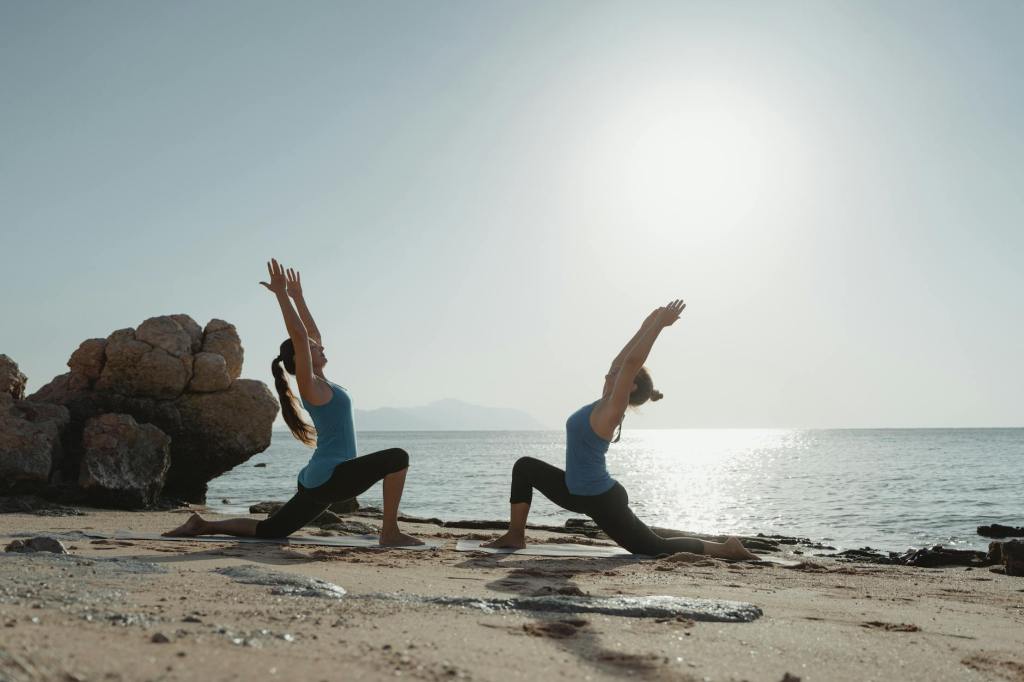
A seasonally aligned approach to movement, regulation and vitality
If you have already read my previous post The Fullness of Being: Yoga Philosophy and the Energy of Summer, then you know that summer represents the peak of the seasonal cycle. Nature is no longer waking up or preparing for growth, but it is fully expressing itself. Trees stand in full bloom, days are long and bright and life naturally moves outward. We often feel this shift in our own bodies too as there is usually more energy available, a greater desire to move, to connect, to travel and to spend time outdoors. The body often feels lighter and more responsive, while the mind becomes more engaged with the world around us. Yet summer brings its own challenges: while spring asks us to awaken, summer demands from us to stay balanced within the expansion. More energy does not automatically mean that we need more intensity. In fact, this season often invites a more refined kind of awareness: the one that helps us remain connected to ourselves while life becomes fuller, busier and more stimulating.
Honouring the season of expansion
In many fitness-based approaches, summer is often associated with doing more: more training, more movement, more activity and more performance. While the body may naturally have greater capacity during this season, yoga offers a slightly different perspective. Summer is not simply about increasing output, but learning how to move within abundance without becoming overwhelmed by it. And nature demonstrates this beautifully. Even at the peak of the season, there is a rhythm to be found: warm afternoons are followed by cooler evenings, activity alternates with rest and expansion is continuously balanced by moments of settling and integration. Thus, yoga encourages us to work with this rhythm rather than against it. Instead of asking ourselves ‘how much I can do’, we should rather begin asking ‘how I can stay connected to myself while doing it’.
The energy of summer: opening and expressing
In TCM (Traditional Chinese Medicine), summer is governed by the Fire element, which represents warmth, vitality, connection and expression. It is considered the most yang season of the year, where energy naturally rises and moves outward. This quality is reflected everywhere in nature: plants have reached their fullest expression, flowers are open and life feels vibrant and visible. Within the body, this same energy often appears as a desire to move more freely, breathe more deeply and engage more actively with life.
The Fire element is associated with the Heart and Small Intestine meridians. These energetic pathways travel through the chest, shoulders, arms and upper body. When energy moves freely through these channels, we often experience openness, vitality, emotional ease and a sense of connection. When energy becomes excessive or scattered, however, we may notice restlessness, overstimulation, disrupted sleep or difficulty slowing down. This is why summer practice should be focusing on directing and regulating the energy that is already available, instead of generating more energy.
Hatha yoga: creating spaciousness through movement
As energy naturally expands during summer, the body often responds well to practices that encourage openness and flow. Hatha yoga becomes a way of exploring this expansion consciously. Rather than focusing on intensity, summer practice mostly benefits from creating spaciousness throughout the body, particularly through the chest, shoulders and upper back. The best qualities of a summer Hatha practice are:
- Breath-led movement
- Spacious transitions
- Gentle heart-opening postures
- Steady rather than forceful effort
- Awareness of sensation over performance
The intention should not be to push the body further, but to support the natural movement of energy already present within the season.
Key Hatha yoga poses for summer
Cobra (Bhujangasana)
A gentle backbend that encourages opening through the chest while strengthening the back body. Cobra supports the upward and expansive qualities associated with summer energy without creating excessive intensity.
Sphinx Pose
A softer variation of spinal extension that stimulates the heart area while allowing the nervous system to remain calm and regulated.
Camel Pose (Ustrasana)
When approached mindfully, Camel creates spaciousness through the front body and encourages a sense of openness and vitality. It can be a powerful expression of summer’s expansive energy.
Fish Pose (Matsyasana)
Often associated with heart-opening and breath expansion, Fish Pose helps create more space through the chest and ribcage while stimulating the energetic pathways connected to the Fire element.
Gentle Twists
Twisting postures help balance the body’s internal systems, support digestion and create a sense of integration within the practice.
Yin yoga: balancing expansion with softness
While summer is considered a yang season, yin yoga remains an essential complement to more active movement. In fact, the more expansive life becomes externally, the more valuable stillness often becomes internally. Yin practice during summer helps regulate the nervous system and provides space for integration. Rather than amplifying the season’s naturally active qualities, it offers balance. The focus shifts toward creating sustainable openness without overstimulation.
Key Yin poses for summer
Supported Fish
A deeply nourishing heart-opening posture that gently stimulates the Heart meridian while allowing the body to completely relax into support.
Melting Heart (Anahatasana)
This pose creates spaciousness through the chest, shoulders and upper back while encouraging a feeling of surrender rather than effort.
Bananasana
Side-body opening supports the ribcage and breath while creating length along energetic pathways that influence overall circulation and flow.
Reclined Twist
A simple yet powerful posture that supports nervous system regulation and helps integrate the effects of more active movement practices.
In all of these shapes, the intention is to create conditions where the body can soften and open naturally over time, without a need to stretch further.
The role of breath
As temperatures rise externally, the body often accumulates more internal heat as well. This is where breathwork becomes particularly valuable during summer practice. Pranayama techniques that encourage slower, softer breathing can help regulate both the nervous system and the body’s energetic state. Practices such as Sheetali and Sheetkari are traditionally used for their cooling qualities, while simple awareness of the breath can often be equally effective. A slower exhale encourages settling, a fuller inhale creates space. Together, they help balance activity with regulation. The breath becomes a bridge between movement and stillness, helping us remain grounded even as energy naturally expands.
Movement as a conversation
Perhaps the most important aspect of summer practice is learning to listen. The body changes from day to day, since energy fluctuates. What feels supportive one week may feel excessive the next. Rather than approaching movement with a fixed agenda, yoga invites us into an ongoing conversation with ourselves. Instead of asking “How much can I do today?”, we might ask “What would feel nourishing today?” Sometimes the answer will be a dynamic flow practice and sometimes it will be a slow yin class. Other times it may simply be a walk outdoors or a few conscious breaths between meetings. The practice itself matters less than the quality of awareness we bring to it.
Balancing Fire with awareness
As you already know, summer encourages movement, connection, expression and vitality. Yet just as fire can warm, it can also burn when left unchecked. This is why balance remains such an important theme throughout the season. A sustainable summer practice honours both movement and rest, expansion and grounding, activity and recovery. It supports a body that feels energised without becoming depleted and a mind that feels engaged without becoming overwhelmed.
Staying connected to your natural rhythm
As summer unfolds, you may notice that movement feels easier, breath feels fuller and energy becomes more available. Rather than rushing to use all of that energy, yoga invites you to stay in relationship with it. To move when movement feels supportive and to rest when it is needed. To open without forcing and to expand without losing your centre. Because the goal of summer practice is not to do more yoga, but to feel more connected while doing it. And perhaps that is what the season teaches us best: that vitality does not come from constant activity, but from learning how to move with awareness inside the fullness of life.
If you feel like exploring the energy of summer through movement, breath and mindful practice, you are warmly welcome to join me in class. You can find my current schedule via the link HERE.





Leave a Reply